




























By Chuka Nnabuife
There are birthdays, and there are birthdays that seem to carry the weight of history.
Across cultures, faith traditions and schools of thought, the time of one’s birth has often been regarded as more than a calendar event. It is seen as the convergence of time, season and purpose — a moment in which destiny quietly begins its journey.
The Holy Bible captures this timeless truth in Ecclesiastes, where time is portrayed as one of God’s profound instruments in ordering human affairs:
“To everything there is a season, and a time to every purpose under heaven.” (Ecclesiastes 3:1)
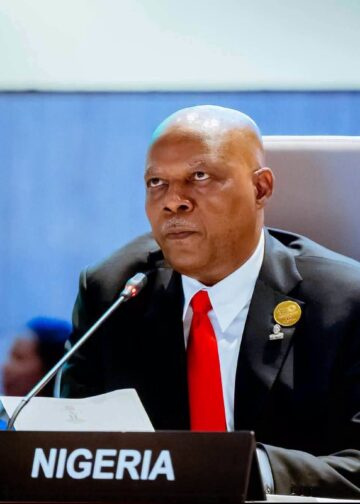
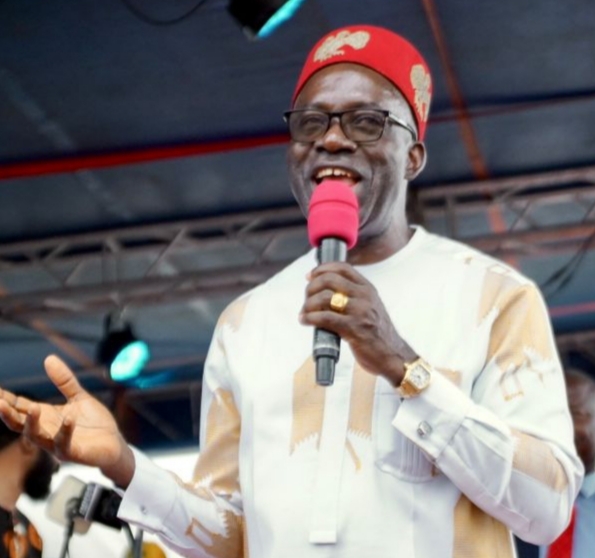
That perspective lends special significance to the 66th birthday of Prof. Chukwuma Charles Soludo, Governor of Anambra State. Born on 28 July 1960—the very year Nigeria emerged from British colonial rule into independence—to parents from Isuofia in Aguata Local Government Area of Anambra State, Soludo’s personal story has unfolded alongside that of the nation itself. His remarkable rise from a rural community to the heights of scholarship, economic policy and political leadership appears, to many, to have been written in the stars.
The Independence Child has grown into a national statesman, institution builder, progressive leader and unwavering advocate of people-centred development. As a university lecturer, mentor, Governor of the Central Bank of Nigeria, presidential economic adviser, international economic consultant and now Governor of Anambra State, one conviction has remained constant: leadership must transform lives, strengthen institutions and expand opportunity.
His politics, like his economics, is anchored in the belief that prosperity must be measured not merely by statistics but by its impact on ordinary people.
That conviction echoes the philosophy of the father of modern economics, Adam Smith. In his magnum opus, The Wealth of Nations, Smith observed:
“No society can surely be flourishing and happy, of which the far greater part of the members are poor and miserable.”
Few quotations better capture Prof. Soludo’s philosophy of governance. His reform agenda consistently seeks to lift the poor, restore dignity to the vulnerable and create opportunities for shared prosperity. His vision extends beyond economic growth to the building of human capital and enduring institutions.
Perhaps that is no coincidence.
Many philosophers and theologians have argued that the historical moment into which a person is born often shapes that individual’s calling. Carl Gustav Jung, reflecting on synchronicity and astrology, argued that birth occurs within a meaningful symbolic order rather than by accident:
“Whatever is born or done at this particular moment of time has the quality of this moment of time.”
If Jung’s insight carries any weight, then it is hardly surprising that a man born in the year of Nigeria’s political birth should dedicate so much of his life’s work to national renewal. His enduring passion for Nigeria and his determination to bridge social, ethnic, religious and economic divides appear remarkably consistent with the historical season into which he was born.
The Scriptures likewise remind us that every life unfolds according to divinely appointed times and seasons.
That thought finds a philosophical complement in the words of Søren Kierkegaard:
“Life can only be understood backwards; but it must be lived forwards.”
Only with hindsight do life’s patterns become fully visible. Looking back across six decades, one sees an intellectual who became a reformer, a scholar who embraced public service, and an economist who entered politics not for power but to advance development. Through every phase of his career, one defining purpose has remained unchanged: helping to build a stronger Nigeria and a more prosperous Anambra homeland.
Christian writers Oswald Chambers and A. W. Tozer maintained, in separate works, that God alone appoints the time and place of every person’s birth according to His sovereign purpose. If that conviction is accepted, then 28 July 1960 was no ordinary date. It was the appointed day for the birth of Chukwuma Charles Soludo.
There is an even deeper symbolism. His father gave him the Igbo name Chukwuma—”God knows.” It is a name that speaks of divine wisdom beyond human understanding. Whether by providence, preparation or perseverance — or through the mysterious interplay of all three — his life’s journey continues to reflect that profound meaning.
As he turns 66, exactly the age of the nation whose fortunes have shaped so much of his life’s mission, Prof. Soludo stands as a reminder that true leadership is measured not by titles held but by lives transformed; not by offices occupied but by institutions strengthened; not by promises made but by hope renewed.
For those who believe that God orders times and seasons, that history has its own quiet logic, and that destiny unfolds according to a higher purpose, this birthday is more than a personal milestone. It celebrates a life that has grown with Nigeria itself — a life devoted to scholarship, reform, service and the relentless pursuit of the common good.
So, his life’s trajectory, his outstanding feats as well as the many more to come, have been predestined in his stars. We have God to thank for that.
Happy 66th birthday, Prof. Chukwuma Charles Soludo. May the years ahead continue to vindicate the promise written in the stars and the profound meaning of your name: ‘Chukwu Ma’ — God knows.
- Nnabuife, FNGE, FSNA, author and journalist writes from Awka, Anambra State via chukafornaija@gmail.com. 08026472357